What Dubai chocolate is in one bite
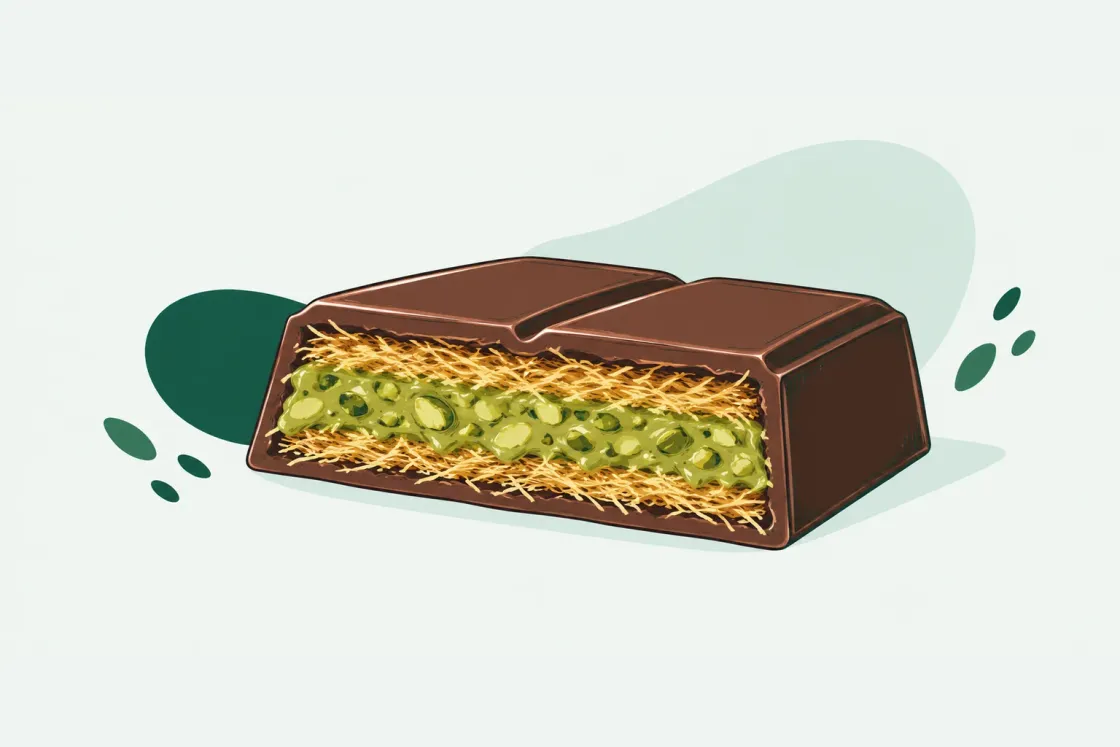
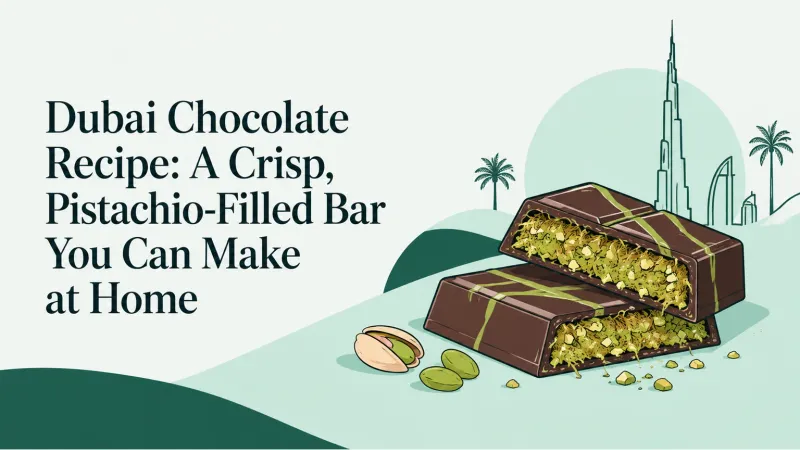
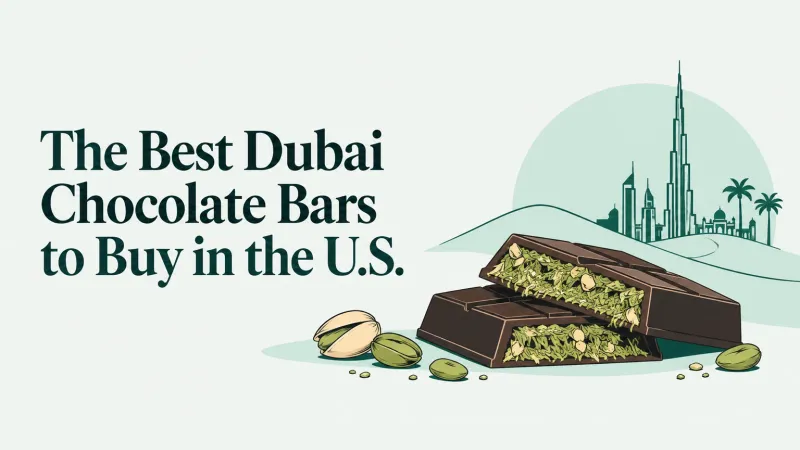
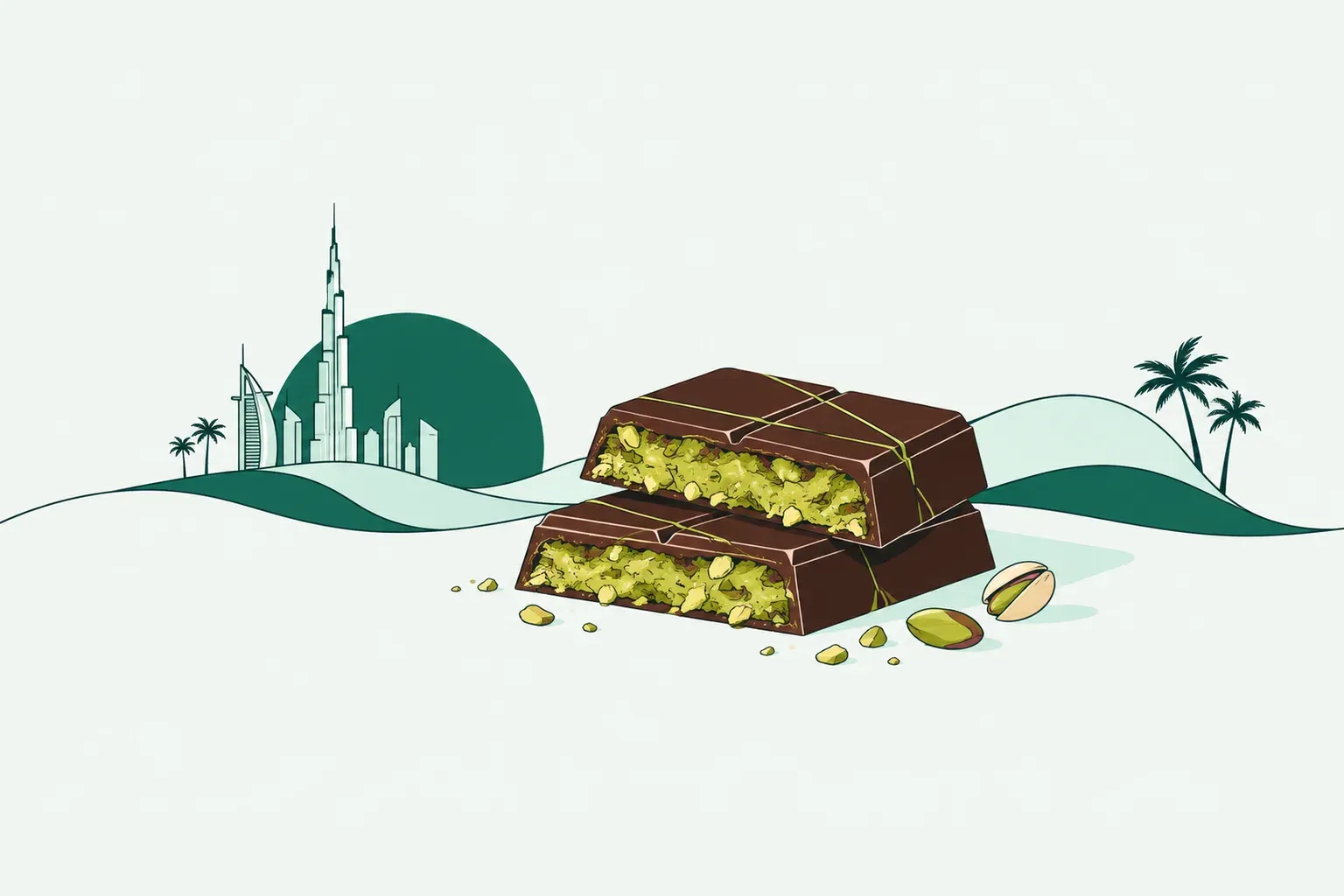
What is Dubai chocolate? It is a chocolate bar style with a shell surrounding a creamy pistachio filling, toasted shredded phyllo pastry, and often tahini. The classic bite combines a firm or snappy outer layer with a rich, nutty center and a crisp, roasted pastry crunch.
The shredded pastry may be labeled kataifi, kadayif, or knafeh dough. These names refer to the thin strands of phyllo used in the filling. The combination echoes the flavors and contrasting textures of Middle Eastern knafeh, but Dubai chocolate is a separate confection rather than a chocolate version of the dessert itself.
The original format used milk chocolate, although dark- and white-chocolate shells are now common. The original bar is associated with the name “Can’t Get Knafeh of It.” Not every pistachio chocolate bar qualifies as Dubai chocolate: without the characteristic shredded pastry, it is usually missing the style’s defining textural element.
Why the texture matters more than the label
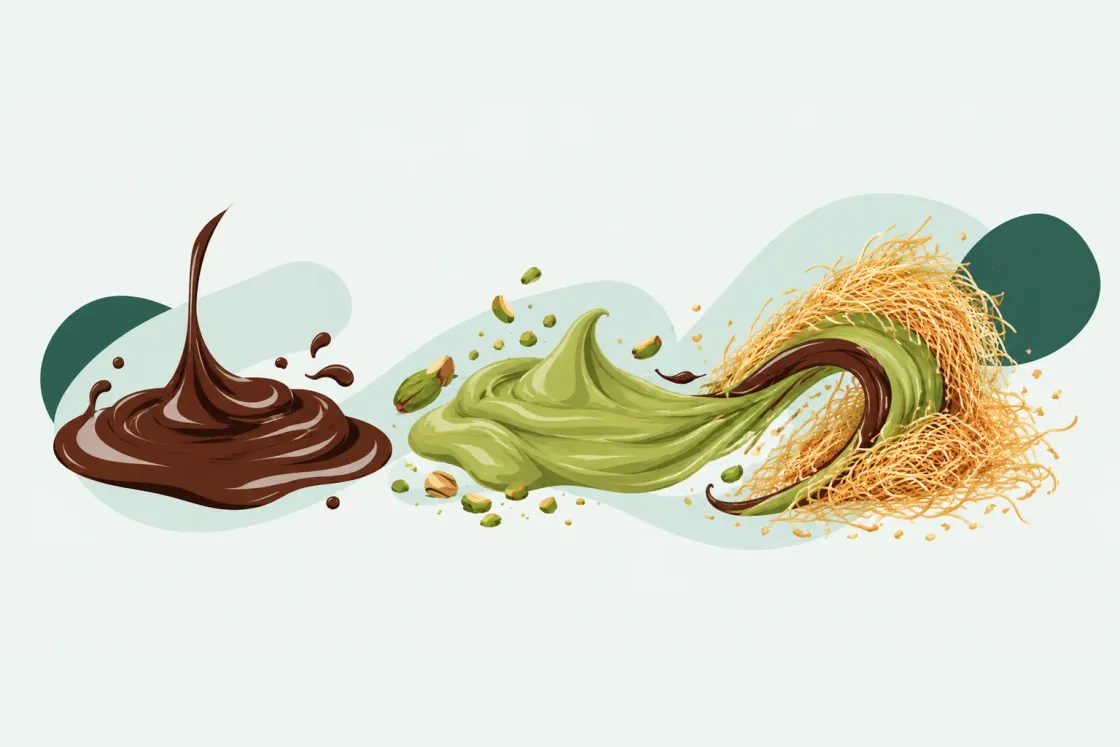
The appeal comes from contrast. The pastry should add a roasted, delicate crunch instead of a chewy or floury layer, while pistachio supplies the main nutty flavor and, in many versions, the green color.
Tahini contributes sesame richness and savory depth, although some formulas use little or none. Color alone is not a quality test: a bright green filling can still taste mostly like sugar or artificial flavoring. Conversely, a less vividly colored filling may contain a more convincing pistachio flavor.
A filling that is too thin makes the bar taste like ordinary chocolate with a trace of pistachio. An excessively thick shell can hide both the filling and the pastry. The combination can also become cloying when the chocolate, sweetened pistachio component, and added sugar all lean sweet without enough roasted flavor, salt, or sesame depth. Damp or stale kataifi removes the crunch that makes the style distinctive.
Where it came from and why it spread so quickly
Sarah Hamouda created the original bar for FIX Dessert Chocolatier in Dubai, United Arab Emirates. The bar was developed in 2021, launched in 2022, and marketed as “Can’t Get Knafeh of It.” A TikTok video featuring the bar became a major viral moment in December 2023, sending demand well beyond Dubai.
The name refers to the Dubai origin associated with the original bar, not to a legally standardized chocolate category. The original FIX bar has not generally been available for routine shipment outside the United Arab Emirates, so most U.S. shoppers encounter Dubai-style interpretations rather than the original product.
The trend quickly moved into bakeries, confectioners, grocery retailers, and home kitchens. Beyond bars, the format now appears in cakes, ice cream treats, lattes, doughnuts, and chocolate-covered fruit. Those adaptations can borrow the flavor combination without reproducing the classic filled-bar experience.
The main types you will encounter in the U.S.
Milk chocolate is the traditional shell style. Its sweet, creamy flavor gives the pistachio filling a soft backdrop. Dark chocolate reduces perceived sweetness and adds cocoa bitterness, making it a useful choice when milk chocolate feels too rich. White chocolate creates a sweeter, more confection-like result and lets pistachio and kataifi remain prominent.
The filling may use sweetened pistachio cream, unsweetened pistachio butter, or freshly made pistachio paste. These descriptions are not interchangeable. Pistachio butter is primarily ground nuts, while pistachio cream is generally sweetened and may include additional fats or dairy; pistachio paste can vary by maker and formula.
Bars may be thick molded slabs, snack-size pieces, filled pralines, truffles, or toppings for other desserts. Vegan versions replace dairy chocolate and butter with plant-based alternatives, but they remain wheat-based when they contain kataifi. Hazelnut, peanut, cookie-butter, and other substitutions create interesting variations on the format, but they do not reproduce the classic pistachio profile. Decorative green and yellow chocolate splashes are visual styling, not essential ingredients.
How to judge a bar before you buy it
Start with the ingredient list rather than the front of the package. It should identify chocolate, pistachio or pistachio cream, and kataifi or shredded phyllo; it should also disclose tahini or sesame if used. A description that says only “pistachio chocolate” may omit the pastry that defines the style.
Check the country of manufacture, distributor, net weight, lot or date information, storage directions, and declared allergens. Pistachios and sesame are common allergens, and kataifi is made from wheat. Milk and soy may also appear in the chocolate or filling. A U.S.-made or U.S.-distributed bar is not necessarily the original Dubai bar; “Dubai-style” commonly signals an interpretation of the format.
Price should reflect pistachios, chocolate, labor, decoration, packaging, and shipping, but a high price does not prove better quality. Warm shipping can soften or bloom chocolate and damage the intended snap, so insulated packaging and delivery timing matter. Store the bar according to its label. Refrigeration can help in warm conditions, but poor wrapping may cause condensation or let the chocolate absorb odors and develop a dull surface. Above all, look for a credible maker, clear ingredients, sensible storage instructions, and a filling-to-shell balance that sounds like the classic style.
When It Makes More Sense to Make Dubai Chocolate at Home
Making a bar at home is worthwhile when you want control over sweetness, cocoa level, tahini, dairy-free ingredients, or the amount of filling. The basic ingredients are chocolate, kataifi, pistachio cream or pistachio butter, and optionally tahini. Frozen kataifi should be thawed before you chop and cook it.
Toast the pastry with butter, oil, or a plant-based fat until golden and crisp, then cool it before mixing it with the pistachio component. Coat the bottom and sides of a mold with chocolate, press in the filling, and seal it with a final chocolate layer. A silicone bar mold is convenient, but a parchment-lined loaf pan can produce a slab that you cut into pieces.
Tempering improves shine, firmness, and snap. Simply melted chocolate can work, although it may set softer or look less polished. Adjust the ratio to suit the result: more kataifi increases crunch, while more pistachio cream makes the center softer and richer. Finished bars keep for roughly two to three weeks when refrigerated in an airtight container. Detailed measurements belong in a dedicated Dubai chocolate recipe; the key decision here is whether customization is worth the preparation.
Common mistakes that make the filling flat or soggy
Under-toasted kataifi stays limp and floury instead of delivering a crisp, roasted note. Overheating it can burn the strands quickly, creating bitterness that overwhelms the pistachio and chocolate.
Use tahini with restraint. Too much can make the filling bitter or overly savory and mask the pistachio. A wet or poorly sealed chocolate shell allows moisture to reach the pastry, while uncovered refrigerator storage exposes the bar to condensation and odors.
Chocolate chips may be inconvenient when you want a firm, glossy shell because stabilizers in some chips can interfere with tempering. Let the bar set fully before removing it from the mold; premature unmolding can crack the shell or leave the filling behind. Finally, cereal, shredded wheat, vermicelli, or crushed cookies are not exact replacements for kataifi. They can make enjoyable variations, but the texture and flavor will be different.