Updated Oct 24, 2026

Dubai Chocolate Cake: Moist Layers, Pistachio Cream, and Crisp Kataifi

Dubai chocolate cake is a celebration cake inspired by the viral chocolate bar: moist chocolate cake layered with pistachio cream and crisp toasted kataifi pastry, then finished with frosting or ganache. The key is preserving the contrast between soft cake, creamy pistachio, crunchy pastry, and rich chocolate.

Key tips for a moist Dubai chocolate cake

  1. Use three thin 8-inch chocolate cake layers for a stable celebration cake.
  2. Toast chopped kataifi slowly until evenly golden, then cool it completely before mixing it with the pistachio filling.
  3. Pipe a frosting border around each layer to contain the pistachio-kataifi filling.
  4. Assemble the cake only when the cake, pastry, and ganache are cool.
  5. The kataifi is crunchiest on the first day, although the covered cake keeps in the refrigerator for up to 5 days.
  6. Serve the refrigerated cake slightly warmed for a softer crumb and fuller flavor.

What makes a Dubai chocolate cake different

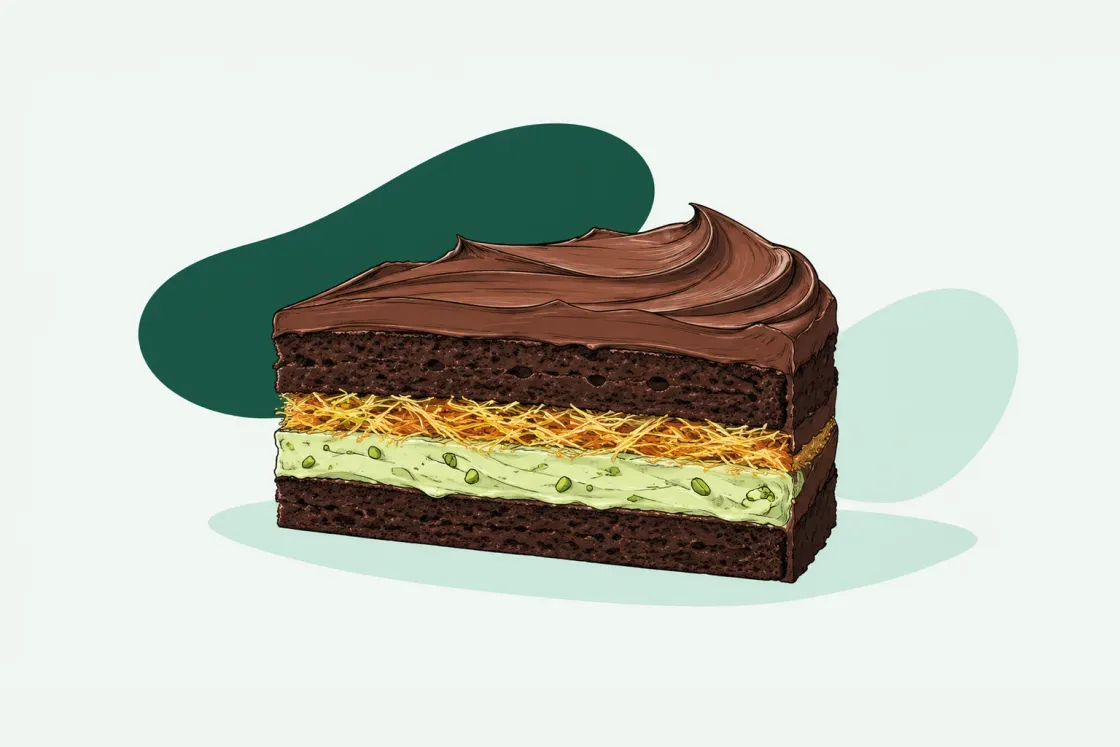
Cross-section of a layered chocolate cake with pistachio cream and golden crisp pastry.

Dubai chocolate cake is an inspired cake adaptation of the viral chocolate bar filled with pistachio filling and shredded kataifi pastry. It is not a traditional standardized cake, so recipes vary: some use two layers, others use three, and the exterior may be buttercream, cream cheese frosting, mousse, or ganache.

The defining contrast is moist chocolate cake, smooth pistachio cream, crisp toasted pastry, and a rich chocolate coating or frosting. A chocolate-pistachio cake without shredded pastry may still be delicious, but it misses the characteristic crunch associated with Dubai chocolate. The pastry is usually called kataifi, kadayif, or kunafa pastry, depending on the package, region, and retailer. These names may refer to fine shredded pastry similar to very thin strands of phyllo.

For a practical U.S. home-baking format, we use three 8-inch chocolate cake layers, two pistachio-kataifi filling layers, and a chocolate frosting or ganache finish. The cake should be soft enough to eat comfortably but firm enough to support the filling. The pastry should remain crisp enough to create a clear textural contrast, not turn chewy inside the cake.

Ingredients that give you the right flavor and texture

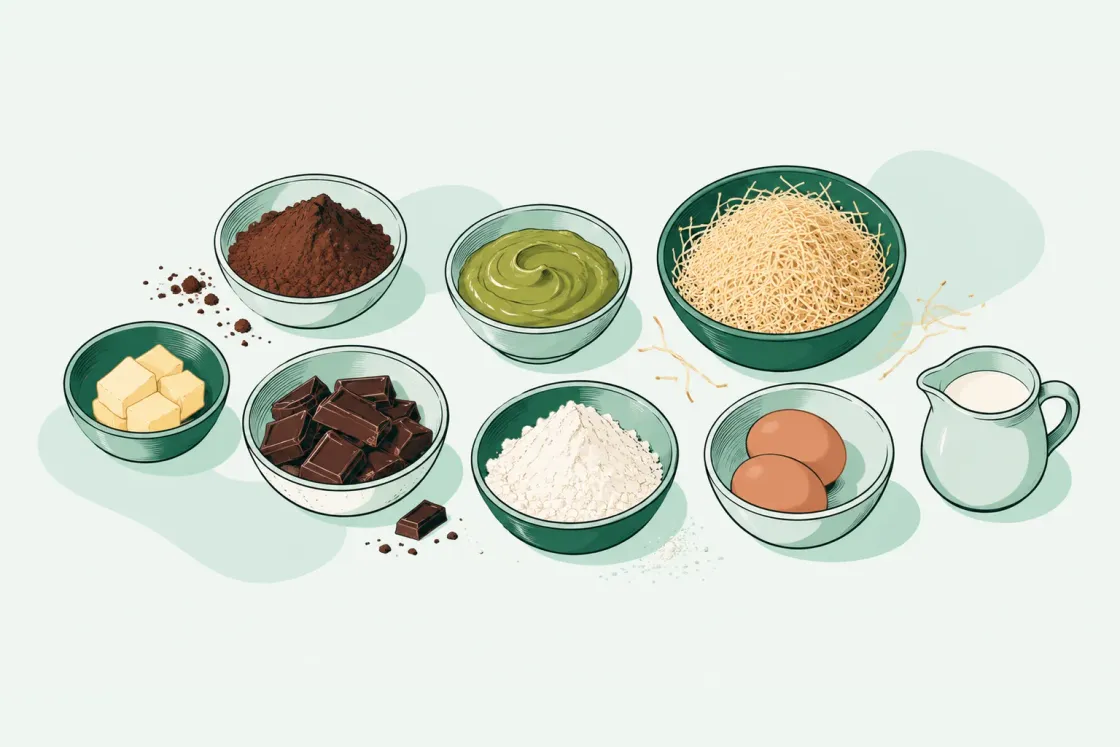
Ingredients for a chocolate, pistachio, and crisp pastry layer cake arranged on a kitchen counter.

For a three-layer, 8-inch cake, gather the following components:

  • Chocolate cake: all-purpose flour, unsweetened cocoa powder, granulated sugar, eggs, baking powder, baking soda, salt, neutral oil, vanilla, and hot coffee. Coffee intensifies the chocolate flavor without making the finished cake taste like coffee. A little vinegar or buttermilk helps provide acidity for the leavening and keeps the crumb tender.
  • Pistachio filling: smooth pistachio butter or pistachio cream, butter, and optional tahini. Use enough pistachio spread for a clearly nutty flavor, not a small amount of pistachio-flavored paste diluted with other ingredients. Tahini is optional; it tempers sweetness and adds a subtle sesame note.
  • Crunch: kataifi pastry and butter. Kataifi resembles finely shredded phyllo dough and is commonly found at Middle Eastern or specialty grocers and through U.S. online retailers. Chopping it before toasting makes the finished filling easier to spread and slice.
  • Frosting and finish: cream cheese frosting or a buttercream-style frosting, plus chopped chocolate and heavy cream for ganache if desired. Milk chocolate gives a sweeter, softer finish; semisweet or dark chocolate creates a more pronounced chocolate flavor.
  • Decoration: finely chopped pistachios, extra toasted kataifi, or an optional thin chocolate or white-chocolate drizzle.

A smooth pistachio spread produces a more even filling than a chunky one. If you cannot find kataifi, finely cut shredded phyllo can provide a similar, though not identical, crisp layer. Substituting ordinary chopped nuts changes the defining pastry texture, while swapping semisweet chocolate for milk chocolate mainly changes sweetness and firmness.

Bake the chocolate layers without losing moisture

Heat the oven to 350°F. Grease three 8-inch round pans, line their bottoms with parchment, and dust or lightly flour the sides. Parchment makes the thin layers easier to release and reduces the risk of sticking.

Whisk the dry ingredients separately. In another bowl, combine the eggs, sugar, oil, vanilla, and vinegar or buttermilk, then add the dry mixture and hot coffee. Mix only until the batter is smooth; overmixing can make the layers less tender. Divide the batter evenly among the prepared pans.

Thin three-layer cakes generally bake for about 13 to 15 minutes per layer, depending on the pan and batter depth. A toothpick inserted in the center should come out clean or with a few moist crumbs. Do not wait for a completely dry toothpick, since that usually means the cake has gone too far. Oil-based chocolate cake stays moist particularly well when chilled, which is useful for a filled cake.

Let the layers cool in their pans briefly, then turn them out and cool them completely on a rack. Trim any domed tops with a serrated knife or cake leveler. If using one deeper 7- or 8-inch cake, expect roughly 45 to 55 minutes of baking time, depending on the pan depth and amount of batter; once cool, divide it into even layers.

A soft crumb is desirable, but a fragile crumb will make assembly difficult. Wrapped, unfrosted layers can be held overnight before assembly. Never fill or frost warm cake: heat softens the frosting and pistachio filling, making the layers slide.

Make a pistachio-kataifi filling that stays crisp

Cut the kataifi into shorter strands before cooking. Melt butter in a skillet over medium-low heat, add the pastry, and toast it slowly, stirring frequently. Continue until the strands are evenly golden and crisp. Slow, regular stirring matters: pastry that is left still may burn in spots while other strands remain pale and soft.

Spread the toasted kataifi on a plate or baking sheet and let it cool completely. Do not mix warm pastry into the pistachio filling. Heat loosens the cream, and the resulting filling can become greasy, runny, or difficult to contain.

Stir smooth pistachio butter or pistachio cream with softened butter and, if desired, a small amount of tahini. Fold in the cooled kataifi until the strands are coated and evenly distributed. The mixture should be spreadable but thick enough to hold a ridge. If it seems loose, chill it briefly; if it is too firm, let it stand at room temperature rather than warming it aggressively.

Moisture from the cake and frosting gradually softens the pastry, so the filling is crunchiest shortly after assembly. Mixing the pastry into the pistachio cream is better than placing a loose, dry layer between the cakes: the coated strands slice more cleanly and are less likely to spill out.

When assembling, pipe a firm ring of frosting around the edge of each cake layer. Spread the pistachio-kataifi mixture inside that border without filling it higher than the frosting ring. This containment step keeps the filling from leaking and gives the stacked cake a more stable edge.

Assemble and finish the cake for clean slices

Place the first cooled, leveled cake layer on a board or serving plate. If you want extra moisture, brush it with a very light pistachio soak made from water and a little pistachio spread. Use the soak sparingly; a wet sponge can weaken the filling and encourage sliding.

Spread a thin layer of frosting over the cake, then pipe a firm frosting border around the edge. Spoon the pistachio-kataifi filling inside the border and smooth it into an even layer. Add the next cake layer and repeat. Place the final cake layer on top, then chill the filled cake until the layers feel firm and settled.

Apply the remaining frosting to the top and sides. For ganache, pour hot but not boiling heavy cream over chopped chocolate. Let it sit until the chocolate softens, then stir from the center until smooth. Cool the ganache until it thickens before spreading it over the cake or pouring it for a drip. Warm ganache can melt the frosting and loosen the stack.

A rustic finish can show swirls of frosting, pistachio, and pastry. For a more polished appearance, smooth the exterior and add a controlled ganache finish. Chopped pistachios, extra toasted kataifi, and a thin chocolate or white-chocolate drizzle all suit the flavor profile.

Chill the completed cake before slicing, then let it stand at room temperature for about 30 minutes.

Troubleshoot the problems that change the whole dessert

Dry cake usually means the layers were overbaked, the batter was placed in an overly deep pan, or too much flour was added. Level flour rather than packing it into a measuring cup, and remove the cake when the center shows a few moist crumbs.

Soggy kataifi comes from under-toasting, mixing the pastry while it is warm, or assembling the cake long before serving. Toast it evenly over medium-low heat, cool it completely, and keep the filling contained rather than adding extra wet soak.

Weak pistachio flavor often results from using only a small amount of pistachio-flavored paste among many other ingredients. Use substantial smooth pistachio butter or pistachio cream, and keep the optional tahini modest so it balances rather than masks the pistachio.

Sliding layers are usually caused by warm cake, warm pastry, loose filling, or a missing frosting border. Cool every component, pipe the containment ring, and chill the filled cake before applying the exterior finish.

For runny frosting, chill the ingredients and mixture, particularly if using whipped cream, and beat only until stable. Overbeating whipped cream can also make it lose structure. If the finished cake is too sweet, choose darker cocoa, semisweet or dark chocolate, and a less heavily sweetened frosting.
Store it without pretending the crunch will last forever

A covered assembled cake keeps in the refrigerator for up to 5 days, but the kataifi is crunchiest during the first day. The longer the pastry sits against cake and filling, the more moisture it absorbs. For the best eating texture, remove the cake from the refrigerator and let it sit for about 30 minutes before serving.

You can prepare the components separately. Wrapped, unfrosted cake layers can be held overnight. Toasted kataifi can be cooled and stored airtight for up to 1 week before it is mixed into the filling. Frosting can be refrigerated for up to 3 days; bring it to a workable temperature and beat it briefly before using.

Sliced cake can be frozen in airtight freezer packaging for up to 3 months. Freezing preserves the cake, but thawing reduces the crispness of the kataifi, so frozen slices will not reproduce the freshly assembled texture. Thaw them overnight in the refrigerator and serve at room temperature.

Dubai chocolate cake questions answered

What is Dubai chocolate cake made of?

It is an inspired layer cake made with chocolate cake, pistachio cream or pistachio butter, toasted shredded kataifi pastry, and chocolate frosting or ganache. The defining combination is chocolate, pistachio, and crisp pastry.

Does Dubai chocolate cake need kataifi or kunafa pastry?

For the characteristic Dubai chocolate texture, yes. Kataifi, kadayif, and kunafa are names you may see for the fine shredded pastry. A chocolate-pistachio cake without it lacks the signature crunch.

What can I use instead of kataifi pastry in the United States?

Use finely cut shredded phyllo pastry, toasted with butter until golden and crisp. It gives a similar result, although the strands and texture may not be exactly the same.

How do I keep the pistachio filling from making the cake soggy?

Toast the kataifi thoroughly, cool it completely, and mix it into thick pistachio cream rather than spreading it loose. Use a frosting border to contain the filling, apply any soak sparingly, and assemble as close to serving as practical.

Can I make Dubai chocolate cake with regular chocolate cake mix?

Yes. A regular chocolate cake mix can provide the cake layers, but bake it in thin layers and avoid overbaking. The pistachio cream and crisp kataifi filling are what give the cake its defining character.

How long does Dubai chocolate cake last in the refrigerator?

A covered assembled cake keeps for up to 5 days in the refrigerator. The cake remains edible longer than the pastry remains crisp, so the best kataifi texture is usually on the first day.

Can Dubai chocolate cake be frozen?

Yes. Airtight-packaged slices can be frozen for up to 3 months and thawed overnight in the refrigerator. The cake holds up, but the kataifi will lose some crispness after thawing.

Should Dubai chocolate cake be served cold or at room temperature?

Keep it refrigerated for storage and stability, then let it stand at room temperature for about 30 minutes before serving. This softens the cake and frosting and brings out the chocolate flavor.

Why is my Dubai chocolate cake sliding when I stack it?

The cake, filling, pastry, or frosting may be too warm or the filling may be too loose. Cool all components, pipe a firm frosting border around each layer, and chill the filled cake before applying ganache.

Keep every layer soft, creamy, and crisp

Build the cake around its contrast: moist chocolate layers, a clearly pistachio-forward filling, and kataifi toasted until genuinely crisp. Cool every component before assembly, use frosting borders to contain the filling, and chill the stack before finishing. For the best result, assemble it close to serving and confirm the current storage or ingredient details for the products you plan to use.

Editorial team

Who is behind this page.

Responsible for writing, checking and publishing this page.

  • DC Dubai Chocolate
Back to top