Updated Oct 24, 2026

Dubai Chocolate Recipe: A Crisp, Pistachio-Filled Bar You Can Make at Home

This Dubai chocolate recipe makes about four thick bars with a firm chocolate shell, creamy pistachio-tahini filling, and crisp butter-toasted kataifi. The key to a successful bar is cooling the kataifi before mixing it into the filling and leaving a clean border so the final chocolate layer can seal completely.

Essential Tips for a Crisp Dubai Chocolate Bar

  1. Toast thawed kataifi until evenly golden and crisp, then cool it fully.
  2. Pistachio cream or spread is sweetened; pistachio butter or paste is usually unsweetened and more intensely nutty.
  3. Coat the mold completely, chill the shell, and leave room around the filling for a leak-resistant seal.
  4. Milk chocolate makes a sweeter bar, while dark or semisweet chocolate gives more contrast.
  5. Refrigerate finished bars in an airtight container for up to two weeks and let them stand for about 10 minutes before serving.
  6. Traditional kataifi contains wheat, so the classic bar is not gluten-free.

What Dubai chocolate is—and what gives it its signature bite

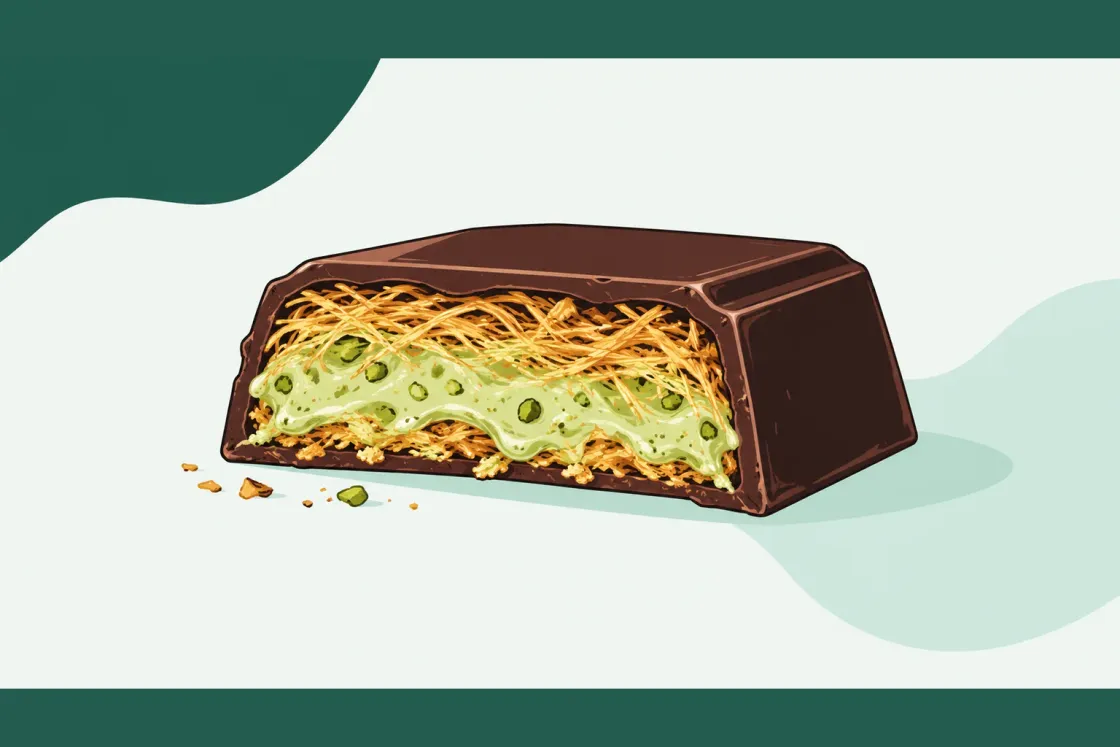
Cross-section of a chocolate bar with pistachio filling and golden kataifi strands

Dubai chocolate is a filled chocolate bar made from three contrasting elements: a firm chocolate shell, a creamy pistachio filling, and crisp kataifi pastry. Kataifi is finely shredded phyllo dough, also called kadayif or angel hair in some stores. Its thin strands become delicate and crunchy when butter-toasted.

The filling commonly combines kataifi with a pistachio spread, tahini, and salt. Tahini adds a subtle sesame flavor that keeps the sweetened pistachio mixture from tasting one-dimensional. The result is rich and sweet, with a crisp interior that contrasts with the smooth filling and chocolate coating.

This dessert is inspired by the pistachio-and-kataifi combination associated with knafeh rather than being one legally fixed formula. Natural pistachio products are often muted green; a vivid green color usually comes from added food coloring. Traditional kataifi contains wheat, so a classic Dubai chocolate is not gluten-free.

This recipe is designed to show you how to make Dubai chocolate in a home kitchen without professional chocolate-making equipment.

Ingredients and equipment for four homemade bars

This recipe makes about four thick bars in deep silicone bar molds.

Shell

  • 12 ounces (340 grams) milk or dark chocolate, finely chopped

Filling

  • 5 ounces (140 grams) thawed kataifi
  • 3 tablespoons (42 grams) unsalted butter
  • 1 cup (about 280 grams) pistachio cream or sweetened pistachio spread
  • 2 tablespoons (about 30 grams) tahini
  • 1/4 teaspoon fine salt

You will also need a silicone chocolate-bar mold, a baking sheet, a large skillet, a dry heatproof bowl, a spatula, and a refrigerator. Place the flexible mold on the baking sheet before adding chocolate so you can move it without spilling.

Milk chocolate gives you a sweeter, creamier shell. Dark or semisweet chocolate creates a deeper, less-sweet contrast with the filling. Choose a pistachio-forward cream or spread when possible. Pistachio cream or spread is generally sweetened, while unsweetened pistachio butter or pistachio paste contains little or no sugar and produces a less sweet, more intensely nutty filling. You can adjust the chocolate choice accordingly.

Kataifi is commonly sold frozen near phyllo dough in Middle Eastern or international markets. Thaw it before separating the strands. White chocolate or colored candy melts can be used for a decorative drizzle, but they are not essential to the bar.

How to make the pistachio-kataifi filling without losing the crunch

Thaw the kataifi according to its package directions, then separate the clumps with your fingers. Cut long strands into roughly 1- to 2-inch pieces. Melt the butter in a large skillet over medium heat, add the kataifi, and cook for about 8 to 10 minutes, stirring frequently.

The pastry is ready when it is evenly golden brown and crisp rather than pale and flexible. If the skillet is crowded, toast the kataifi in batches so the strands brown instead of steaming. Transfer it to a separate bowl or baking sheet immediately; leaving it in the hot skillet can continue cooking the bottom layer.

Let the kataifi cool completely. In another bowl, stir together the pistachio spread, tahini, and salt. Fold in the cooled pastry until the mixture holds together but still has distinct crisp strands. Do not add hot kataifi to the pistachio mixture or chocolate shell, because its heat can soften the chocolate and its steam can encourage sogginess.

The filling should be cohesive but not wet or loose. If you use unsweetened pistachio butter or paste instead of sweet pistachio spread, expect a less sweet filling; you can add sweetness to taste, but avoid adding liquid, which can soften the pastry. The most important texture decision is thorough browning followed by complete cooling.

Build a chocolate shell that seals the filling

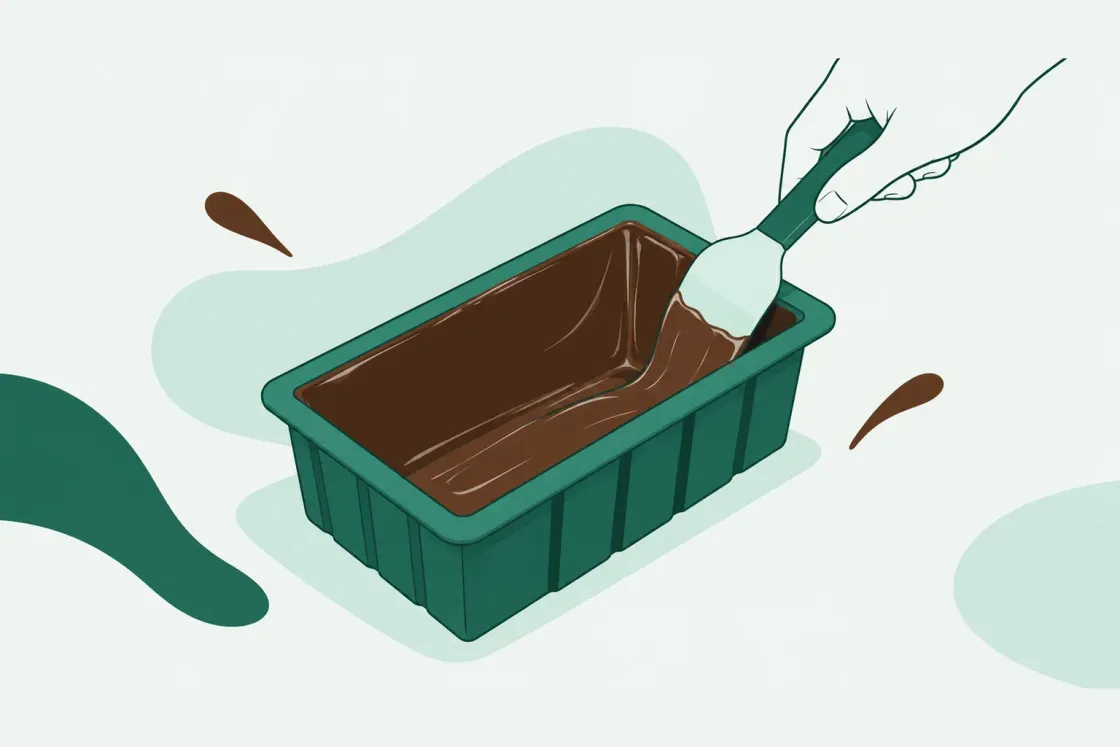
Melted chocolate being spread over the bottom and sides of a silicone bar mold

Put the silicone mold on a baking sheet. Melt the chocolate in a completely dry heatproof bowl over gently simmering water, or use microwave bursts of about 20 to 30 seconds, stirring between bursts. Keep water, steam, and wet utensils away from the chocolate because even a small amount can make it seize.

For a simple untempered shell, melt the chocolate gently until smooth. For a more glossy, firm shell, use a basic tempering route: melt about two-thirds of the chocolate, remove it from the heat, and stir in the remaining one-third until smooth and slightly cooled. Milk chocolate is worked at a lower temperature than dark chocolate, so a thermometer is useful if you have one, although it is not required for this home recipe.

Spoon enough chocolate into each mold to cover the bottom and all sides. Rotate or spread the chocolate up the walls, then tip out excess chocolate and scrape the rim clean. The coating must be continuous, with no thin gaps or exposed silicone. Chill the coated molds for about 5 to 10 minutes, until the shell is firm.

A shell should be thick enough to hold the filling but not so thick that it overwhelms the kataifi crunch. Untempered melted chocolate can still produce a tasty bar, but it may be softer, less glossy, and more prone to melting at room temperature. If the chocolate is still very warm, wait briefly before adding a decorative white or green layer so the decoration does not blur.
Fill, seal, chill, and unmold the bars

Spoon the cooled pistachio-kataifi filling into the set chocolate shells. Do not press it hard against the sides. Leave a small margin at the top and around the edge so the final chocolate layer can meet the shell. Level the filling gently; overpacking can crack the shell or force filling through weak spots.

Rewarm the remaining chocolate only until it is pourable. Cover the filling completely, paying particular attention to the perimeter, then scrape the back flat. The top chocolate must connect with the shell around every edge. Exposed pastry at the rim is a common route for leaks and moisture.

Refrigerate the assembled bars for about 20 to 30 minutes, or until completely firm. Flex the silicone mold gently to release each bar. If a bar resists, chill it longer instead of forcing it out. Let the bars stand at room temperature for about 10 minutes before eating so the filling becomes creamy and the chocolate is not excessively hard.

For clean cuts, use a sharp, warm, dry knife and wipe the blade between cuts. A finished bar should have a firm shell, a creamy pistachio center, and audible crispness from the kataifi.

Fix the problems that make homemade Dubai chocolate disappointing

Soggy kataifi usually comes from insufficient browning, adding the pastry while it is warm, too much moisture in the filling, or condensation during storage. Toast it until uniformly golden and crisp, cool it fully, and keep completed bars tightly covered.

Leaking filling usually means the shell is too thin, the filling touches the mold edge, the bar is not fully chilled, or the top seal is incomplete. Make sure the first chocolate coat reaches every side, leave a border around the filling, and scrape the closing layer across the entire rim.

Excessive sweetness is best corrected by using dark or semisweet chocolate and unsweetened pistachio butter or paste instead of milk chocolate and sweet pistachio spread. Weak pistachio flavor calls for a pistachio-forward cream or butter; do not replace most of it with a neutral nut spread.

If the chocolate becomes thick or grainy, it may have overheated or contacted water. Melt it gently in dry equipment. If it is dull or soft, it was likely not tempered or was stored too warm. A pale green filling is normal when the pistachio product contains no added coloring. Chocolate that does not release cleanly generally needs more setting time, and the silicone mold should be clean and completely dry before use.

Storage, substitutions, and the no-mold shortcut

Store finished bars in an airtight container in the refrigerator for up to two weeks. Bring them out for about 10 minutes before serving for a softer filling and fuller flavor. Freezing is possible if the bars are wrapped airtight, but condensation during thawing can reduce the kataifi's crispness. Do not add fresh fruit or wet fillings if preserving crunch is the priority.

Kataifi can be replaced with finely chopped regular phyllo pastry, but the strands and texture will not be identical. Toasted shredded-wheat cereal or crisp rice cereal can provide a quick crunch, but those versions change the flavor and are not classic kataifi. Without a bar mold, spread the chocolate and filling in a lined loaf pan or make a layered chocolate bark. The flavor remains similar, but the thick molded shape is lost.

For a vegan version, use dairy-free chocolate, plant-based butter, and pistachio spread and tahini with no dairy ingredients. For a gluten-free version, use a verified gluten-free kataifi-style substitute; ordinary kataifi and phyllo are wheat-based. These substitutions can preserve the basic contrast, but they may not reproduce the exact texture of the classic bar.

Dubai Chocolate Recipe Questions Answered

What is the best chocolate for Dubai chocolate?

Milk chocolate makes the bar sweeter and creamier. Dark or semisweet chocolate gives a deeper flavor and more contrast with the sweet pistachio filling.

Can you make Dubai chocolate without tempering?

Yes. Gently melted chocolate can form the shell, although an untempered bar may be softer, less glossy, and more likely to melt at room temperature.

Where can you buy kataifi in the United States?

Look for frozen kataifi near phyllo dough in Middle Eastern or international markets. It may also be labeled kadayif or angel hair.

Is pistachio cream the same as pistachio butter or pistachio paste?

No. Pistachio cream or sweet pistachio spread is usually sweetened, while pistachio butter or paste is generally unsweetened and more intensely nutty.

Can you make Dubai chocolate without kataifi?

Yes, but the result is no longer classic. Chopped phyllo, shredded-wheat cereal, or crisp rice cereal can add crunch with a different texture and flavor.

Why is my Dubai chocolate filling not green?

Natural pistachio products are often muted green or tan. Vivid green color usually comes from added food coloring, so a pale filling is not necessarily a problem.

How do you keep the kataifi crunchy?

Toast it until evenly golden, cool it completely before mixing, avoid wet fillings, seal the chocolate fully, and store the bars airtight to limit condensation.

Can you make this recipe vegan or gluten-free?

Yes. Use dairy-free chocolate and plant-based butter for a vegan version. For gluten-free bars, use a verified gluten-free kataifi-style substitute because ordinary kataifi contains wheat.

How long does homemade Dubai chocolate last?

Stored airtight in the refrigerator, the bars keep for up to two weeks. Let them stand at room temperature for about 10 minutes before serving.

Do you need a silicone mold to make Dubai chocolate?

No. A lined loaf pan or bark-style layer works, although it produces a flatter shape and may be harder to portion than a deep silicone bar mold.

Enjoy a Homemade Dubai Chocolate Bar

For the most reliable homemade Dubai chocolate, prioritize texture over decoration: brown the kataifi thoroughly, cool it before combining it with the pistachio mixture, and build a complete chocolate seal around the filling. Choose milk or dark chocolate and sweetened or unsweetened pistachio products according to the sweetness you want, then keep the finished bars airtight so the pastry stays crisp.

Editorial team

Who is behind this page.

Responsible for writing, checking and publishing this page.

  • DC Dubai Chocolate
Back to top